About Brain Games
A teacher asks: 'Will a brain-training collection actually stick with my students, or is it just another set of quick gimmicks?' The answer lies in how these six mini-games are sequenced. One minute you're matching pairs to test memory, the next you're solving a logic puzzle that demands quick math. The games rotate through attention, coordination, and arithmetic, so no single skill gets overworked. Each round demands a different kind of focus—tap to start, then react. It's not deep, but it's varied enough to keep a classroom engaged for short bursts. Best for ages 8–12 who need a warm-up or a mental reset.
This collection of six mini-games sharpens your memory, attention, math, logic, and coordination. Each game builds a different mental skill, and they're perfectly sequenced to keep you thinking and reacting. Tap the screen to play—it's a fun way to stay sharp and have fun at the same time.
How to Play Brain Games
- Tap the screen to begin a mini-game.
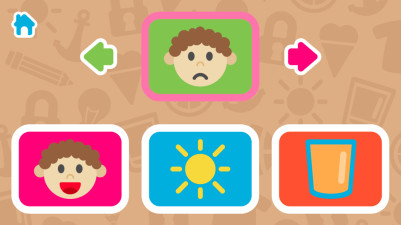
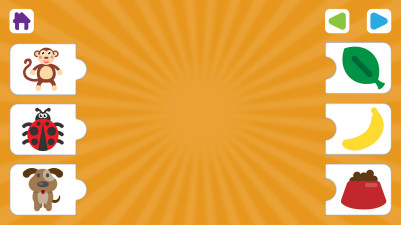
- Match pairs or solve math problems based on the current game's prompt.
- React quickly—some games measure your speed along with accuracy.
- Each mini-game ends after a set number of rounds or when time runs out.
- Swipe or tap again to move to the next game in the sequence.
Game Features
- Six distinct mini-games train memory, attention, math, logic, and coordination in one session.
- Sequenced rotation prevents mental fatigue by switching skill demands often.
- Speed scoring adds urgency that rewards both accuracy and fast reaction.
- No text-heavy instructions—tap-based controls make it accessible to pre-readers.
- Session length is short, making it ideal for classroom transitions or brain breaks.
Tips & Learning Strategies
- Focus on accuracy first in math games, then work on speed once the patterns feel familiar.
- For memory games, try verbalizing the items aloud as you tap to reinforce recall.
- If a logic puzzle stumps you, restart that mini-game immediately to try a new pattern.
Frequently Asked Questions
How long does one full session of all six games take?
Each mini-game lasts roughly one to two minutes, so a full rotation takes about 8–12 minutes depending on reaction speed.
Can I skip a mini-game if my child finds it too hard?
The games play in a fixed order with no skip option, but each game is short enough that a difficult one ends quickly.
Does the game track scores or progress over time?
The information provided does not mention any persistent score tracking between sessions—each playthrough starts fresh.
Will this help improve my child's math skills specifically?
One of the six games focuses on arithmetic, but the collection is designed for broad mental exercise rather than deep math practice.
Category & Topics
Game Details
- Subject: Puzzle & Logic