About EQ Test Puzzle
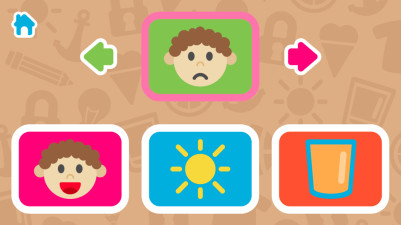
You rotate a puzzle piece with a twist gesture and drag it into an empty slot, but the picture isn't a cat or a castle — it's a face showing sadness. That's the core of EQ Test Puzzle: you're building emotional intelligence while solving jigsaws. Each level centers on one emotion — happiness, sadness, anger, surprise — and you match pieces based on colors, expressions, or keywords. The twist? You're not just assembling an image; you're learning to decode feelings. It's great for kids who need practice recognizing emotions, especially those on the autism spectrum or in early social-skills training. The difficulty ranges from simple icon matches to more subtle expression cues, so it grows with the child.
This puzzle game builds emotional intelligence by combining emotion recognition with jigsaw challenges. Kids match icons, scenarios, and pieces to identify feelings like happiness or sadness, boosting empathy and problem-solving. Tap to choose difficulty, drag pieces into slots, and rotate them to fit. Need help? Use the Hint button. Each level focuses on a specific emotion through colors, expressions, or keywords, making learning fun and interactive.
How to Play EQ Test Puzzle
- Tap to select a difficulty and start a level.
- Drag puzzle pieces into empty slots on the screen.
- Rotate pieces with a twist gesture to fit them correctly.
- Tap the "Hint" button if you need guidance.
- Match all pieces to the level's target emotion using colors, expressions, or keywords.
Game Features
- Combines jigsaw-puzzle mechanics with emotion recognition, a rare hybrid that trains both spatial and social skills.
- Each level isolates a single emotion — like happiness or anger — so kids learn to distinguish feelings step by step.
- The hint system is genuinely useful: it nudges without solving the puzzle, preserving the challenge.
- Color, expression, and keyword cues let multiple learning styles access emotional vocabulary.
Tips & Learning Strategies
- Before dragging, scan the piece for the dominant color or the expression on the face — that's your clue to which emotion it belongs to.
- Use the twist gesture early: rotating a piece often reveals a gesture or word you missed flat.
- When stuck, tap Hint right away rather than brute-forcing — it teaches you what clue you overlooked.
- Play on easy difficulty first to learn the emotion-color mapping, then increase difficulty for more subtle expression cues.
Frequently Asked Questions
How does the game teach emotions — is it just matching faces?
No. You match puzzle pieces based on colors (e.g., yellow for happy), facial expressions, or keywords (like "sad"). Each level focuses on one emotion, so kids learn multiple cues for the same feeling.
Can my child change the difficulty mid-game?
You select the difficulty at the start of each level by tapping an option. There's no in-level difficulty slider, but you can exit and restart with a different difficulty.
What happens if a kid can't rotate the piece correctly?
The twist gesture can be tricky. The game doesn't penalize wrong rotation — pieces just won't snap in until oriented correctly. The Hint button can show the correct orientation.
Are the emotions limited to basic ones like happy and sad?
The description mentions happiness and sadness, plus examples like anger and surprise. Based on the level structure, higher difficulties likely introduce subtler emotions (e.g., frustration, excitement), but the exact set isn't listed.
Does it work on a tablet with touch?
Yes, the instructions say "tap" and "drag," which are touch actions. It should work on any touchscreen device that supports the browser.
Category & Topics
Game Details
- Subject: Puzzle & Logic